
A vessel is broken on purpose. Then it is rebuilt in gold. What was once a bowl becomes a line of meaning — an object made to sit at the center of a table, and to start a conversation.
Begin Your CommissionThe seam is the point.
Kintsugi is a Japanese tradition of mending broken ceramics with lacquer, then finishing the join in gold. It does not hide the break. It marks it. Where another culture might discard a cracked bowl, this one draws the fracture in a precious metal and lets everyone see it. The history is the value. The scar is the beauty.
Junko works in hon-urushi — genuine lacquer tapped from the lacquer tree, not the synthetic coating sold in most kits. It cures slowly, over weeks. It grows stronger and deeper with time.
Then she carries the tradition further — from craft into art. Classical kintsugi waits for a vessel to break, then mends what chance decided. Junko does not wait. She chooses the vessel. She cuts it with intention. She composes the line before the gold ever touches it. The break is no longer an accident to be healed — it is a decision to be made. A craft of mending is elevated into a work of its own.
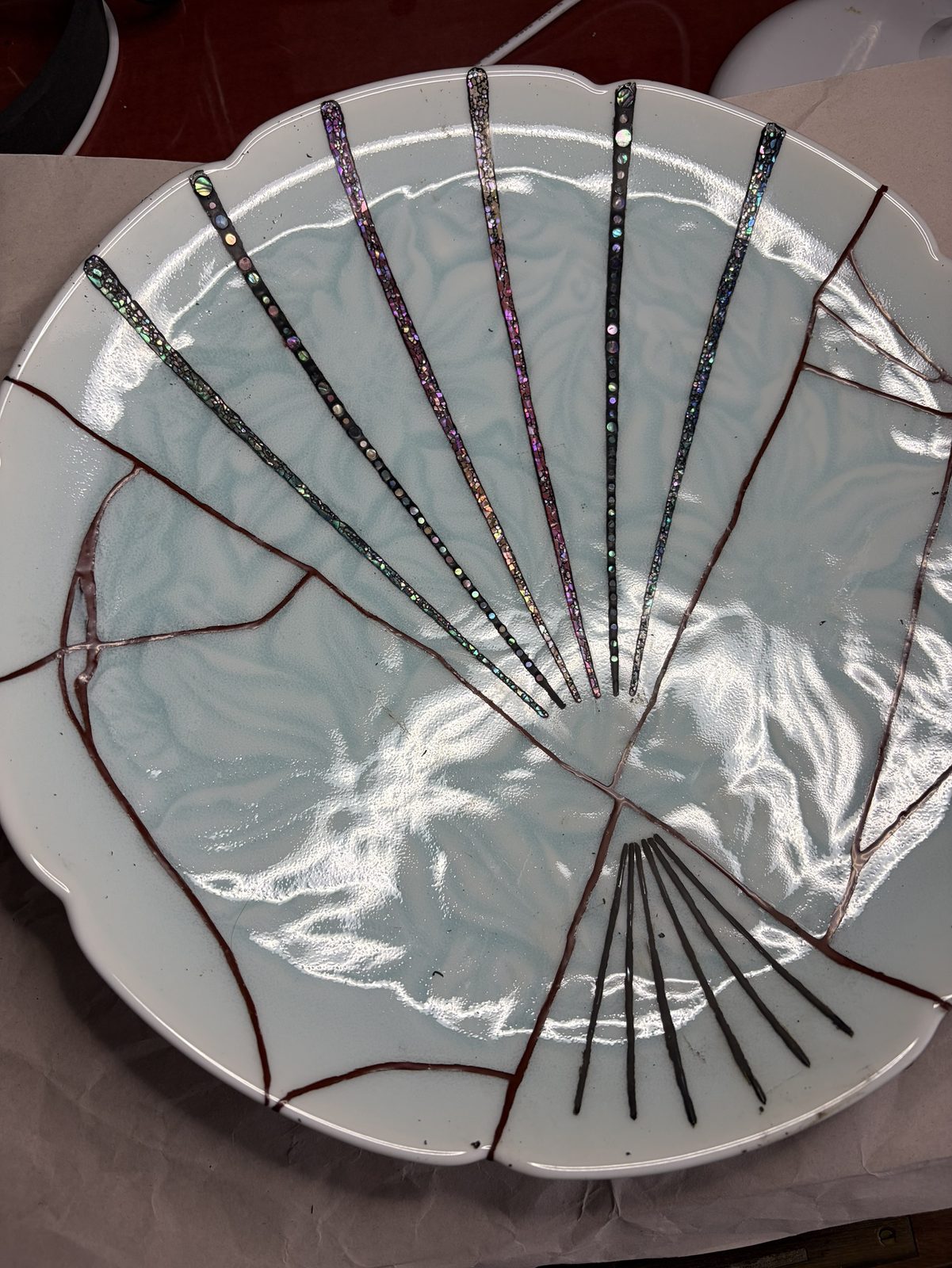
Every piece begins with a chosen vessel. Not a broken one found by chance, but one selected for its form, its glaze, the way it will carry a line. This is the first authorial act: deciding what the object wants to become.
The vessel is separated with intention. Where classical kintsugi accepts the shape of an accident, Junko draws the fracture herself — placing the break where the composition needs it. This is the moment repair turns into design.
The pieces are rejoined with hon-urushi, genuine lacquer, laid in patient layers. Each layer must cure before the next. There is no shortcut. The strength of the finished object is built in this slow, invisible stage — the reason a piece takes two to four months.
The seam is finished in gold, and where the composition calls for it, in raden — inlaid mother-of-pearl that shifts with the light. This is where the line of meaning becomes visible. The scar, drawn in something precious.
The Maker
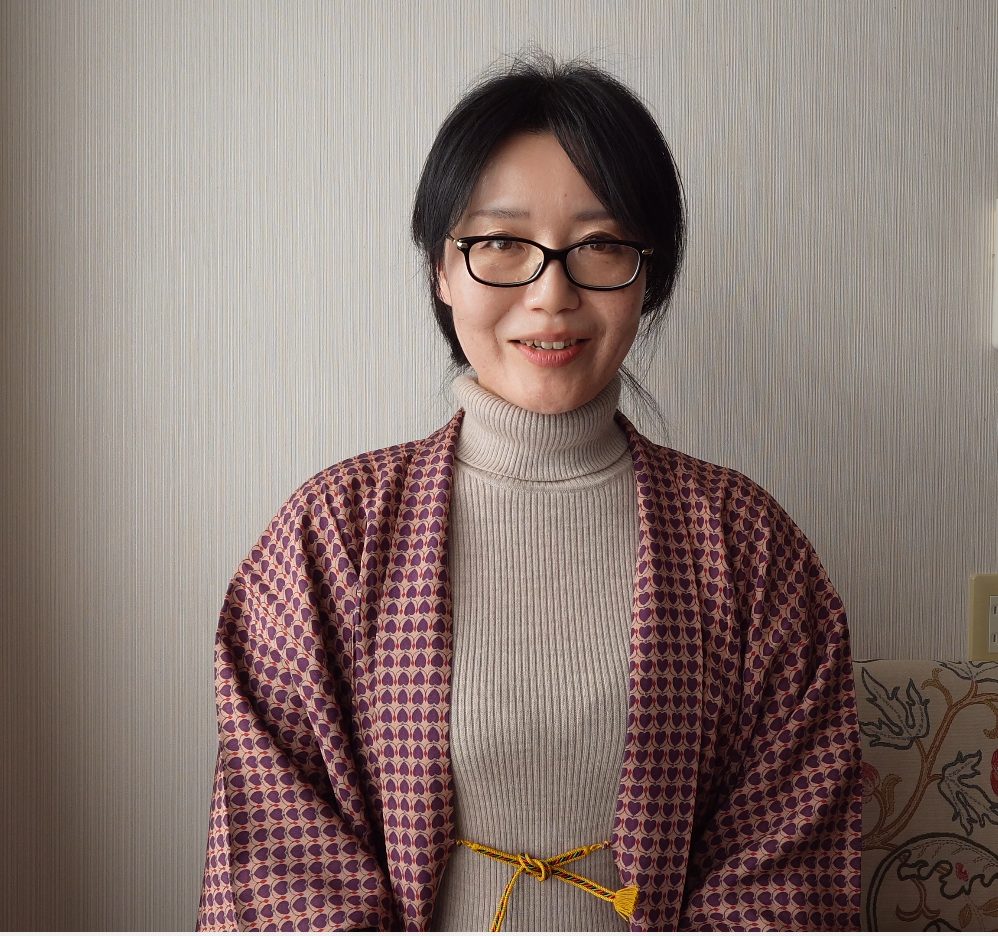
Kintsugi began as a craft of mending — a way to return a broken vessel to the table. Junko carries it somewhere else: into art. In her work, expression starts before the lacquer does. Choosing the vessel. Deciding where it breaks. The cut itself is part of the composition, as much as the gold that follows. She works only in hon-urushi — genuine lacquer, cured slowly over weeks, never the synthetic substitute. And she does not stop at vessels. Her practice keeps widening — leaving the familiar shape of the bowl for new materials and new forms of expression.
A piece takes two to four months. Most of that is lacquer, curing in layers that cannot be rushed — the slow, invisible work that makes the object strong. None of it is repeatable. The vessel is chosen once, cut once, composed once. There is no second copy.
The price also holds a purpose. Takumi Collective exists so that a maker can live by their craft — so that the hands doing this work can keep doing it. When you commission a piece, you are paying for months of a single person's attention, and for a world in which that attention has a future.
Start with a free application. If it's a fit, we invite you to a Private Design Consultation — the fee is credited in full toward your piece.
Begin Your Commission